IT incidents are not simply technical problems: they can result in lost operating time, customers waiting for service, order delays and costs associated with business interruption. According to various industry studies, one hour of downtime can cost an SME from several hundred to several thousand euros, depending on its activity. Despite this, many companies continue with IT maintenance services that no longer adequately meet their requirements, partly because changing providers can be perceived as complex.
This article examines the main signs that may indicate the need to review or change an IT maintenance contract.
1. Response times keep getting longer
If an incident that was previously resolved within a couple of hours now requires an entire day, or access to technical support is becoming increasingly difficult, there may be a mismatch between the provider’s growth and its service capacity. A maintenance contract should establish defined response and resolution times according to the type of incident, avoiding excessive dependence on the availability of an assigned engineer.
2. The same incidents keep coming back
Resolving only the symptom of an incident can result in recurring problems. If the same server, application or workstation experiences repeated incidents, maintenance may be operating reactively rather than preventively. This may be related to the absence of root-cause analysis or insufficient resources allocated to the account.
3. There’s no clear SLA (or it’s not being met)
The SLA (Service Level Agreement) should clearly define the provider’s service obligations and the associated response times. If the company does not have a written SLA, or if the agreed commitments are not being met, the service lacks a sufficiently defined framework. This becomes particularly relevant in environments combining Linux, macOS and Windows, where coordination between systems requires clearly established processes.
4. There’s no plan for replacing equipment
When a device fails and cannot be repaired immediately, it is important to know whether replacement equipment is available or whether operations must wait until a replacement is obtained. The absence of stock or a replacement procedure can turn an isolated incident into a prolonged period of operational disruption.
5. No visibility into infrastructure (data centers, racks, cabling)
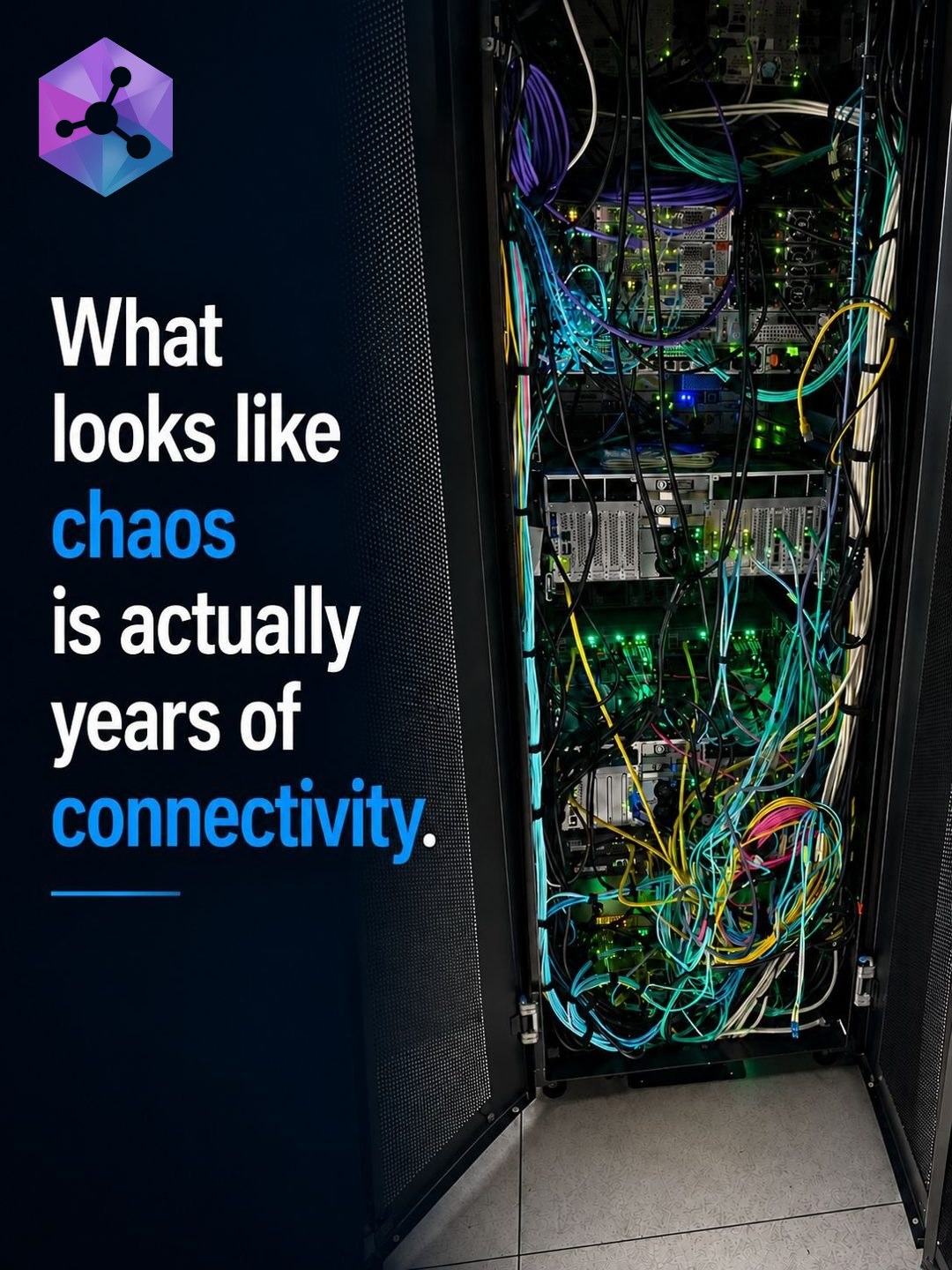
IT maintenance should not be limited to resolving incidents on individual workstations. As a company grows, its infrastructure requirements also evolve. Server rooms, data cabling and uninterruptible power supply (UPS) systems require planning and monitoring to prevent maintenance from becoming exclusively reactive.
6. Zero flexibility for demand spikes or one-off projects
Large-scale equipment migrations, new office openings and the removal of obsolete equipment with certified data destruction may require additional resources for a defined period. If the provider cannot provide additional technical personnel, the company must turn to third parties for specific projects, losing the operational advantage of having a single point of contact.
What a good IT maintenance contract should include
Before signing or renewing a contract, it is advisable to check that it includes, as a minimum:
- Response and resolution times by incident type (written SLA).
- Software and hardware coverage for the operating systems used by the company.
- Equipment replacement procedures when repairs cannot be completed immediately.
- On-site support, in addition to remote support, for incidents that require it.
- The ability to scale the service (temporary technical reinforcement, migration projects and new installations).
- Responsible management of obsolete equipment, including data copying and a Certificate of Destruction where applicable.
How we do it at Noneotech
At Noneotech, we provide IT maintenance for businesses operating Linux, macOS and Windows environments, with on-site support and replacement equipment when a repair cannot be completed immediately. Additionally, we design and install complete data centers and server rooms —including racks, cabling and UPS systems— both for companies starting from scratch and for those needing to modernise an existing installation.
If any of the situations described above apply to your company, it may be appropriate to review the current IT maintenance service.
Would you like to assess whether your IT maintenance service meets your company’s current requirements? Request a no-obligation quote and we will assess your case at no cost.